Truck & Car Guides / Trucks explained
Sleeper cab vs day cab
Sleeper cabs are rolling apartments for drivers who are out for days or weeks. Day cabs are lighter and nimbler for drivers who sleep at home. Here is how they compare.
Two kinds of cab
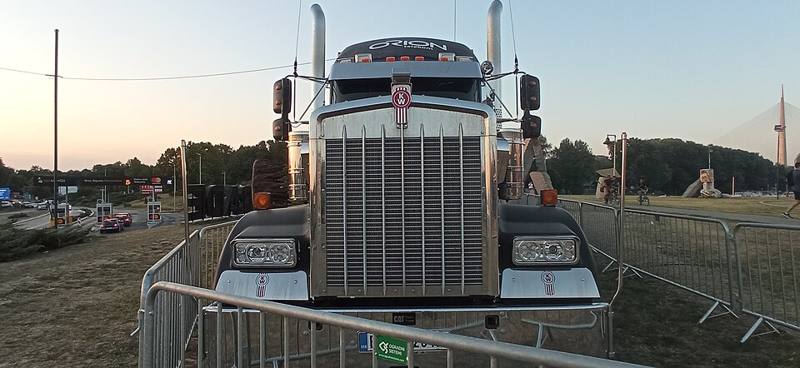
Every tractor has a cab, but what sits behind the driver's seat changes the whole job.
- A day cab has just the seats. The back wall of the cab sits right behind the driver. These trucks are built for local and regional work where the driver goes home every night.
- A sleeper cab extends the cab with a bunk area. On long-haul trucks this can be a compact "flat-top" bunk or a tall, stand-up "raised roof" sleeper with storage, a fridge and room to change clothes.
What is inside a modern sleeper
Sleeper sizes are usually quoted by length, measured from the back of the cab to the back wall of the sleeper. Common long-haul sleepers run from roughly 60 to over 80 inches deep. Inside you might find:
- A mattress, often with an optional upper bunk for team drivers.
- Cabinets, a wardrobe and a fold-down table.
- Power outlets, a small refrigerator and a microwave on an inverter.
- Climate control that can run without idling the main engine, using an auxiliary power unit (APU), battery-powered HVAC or a fuel-fired heater.
Many states and cities limit how long trucks may idle. Battery HVAC systems and APUs let drivers stay comfortable during rest breaks without running a large diesel all night.
Day cab advantages
- Lighter weight: often several thousand pounds lighter than a big sleeper tractor, which means more legal payload under the 80,000-pound gross limit.
- Shorter wheelbase: easier to maneuver in tight city streets, ports and warehouse yards.
- Lower cost: cheaper to buy and usually better on fuel in stop-and-go work.
- Home every night: the job they serve usually brings the driver home daily.
Day cabs dominate in local delivery, port drayage, construction (dump trucks and mixers), tanker work close to terminals and regional "out and back" runs.
Sleeper cab advantages
- Legal rest anywhere: federal hours-of-service rules require long off-duty periods. A sleeper lets a driver take those breaks at a truck stop or rest area instead of paying for a motel.
- Team driving: one driver sleeps while the other drives, keeping freight moving almost nonstop.
- Split sleeper berth option: time in the bunk can be split in ways that a day cab driver cannot use.
- Living space: for drivers out for one to three weeks, the sleeper is home.
Conventional vs cabover
Separate from day cab vs sleeper is the shape of the cab:
- A conventional tractor has a long hood with the engine in front of the driver. It is the standard look in North America.
- A cab-over-engine (COE), or cabover, puts the cab on top of the engine with a flat front. Cabovers were common in the US when overall vehicle length limits made every foot count. After federal law in the early 1980s shifted limits to trailer length instead of overall length, conventionals took over in the US. Cabovers remain standard in Europe and much of Asia, where overall length limits are tighter.
Comparison table
| Feature | Day cab | Sleeper cab |
|---|---|---|
| Typical work | Local, regional, port, construction | Long haul, team, over the road |
| Weight | Lighter | Heavier |
| Maneuverability | Better | Longer wheelbase |
| Rest options | Driver goes home | Bunk on board |
| Purchase cost | Lower | Higher |
| Driver comfort | Seat only | Bed, storage, climate control |
Which one is right
For a carrier the choice comes down to the freight. If loads deliver within a few hundred miles and drivers can be home nightly, a day cab saves weight, fuel and money. If loads cross the country, a sleeper is not a luxury but a requirement. Many new drivers start on a sleeper with a large carrier, then move to local day-cab work once they have experience. See company driver vs owner-operator for more on how these jobs differ.