Truck & Car Guides / Trucks explained
Truck transmissions, from 10-speeds to automated manuals
Why big trucks need so many gears, how a manual truck gearbox differs from a car's, and why automated manuals have taken over new truck sales.
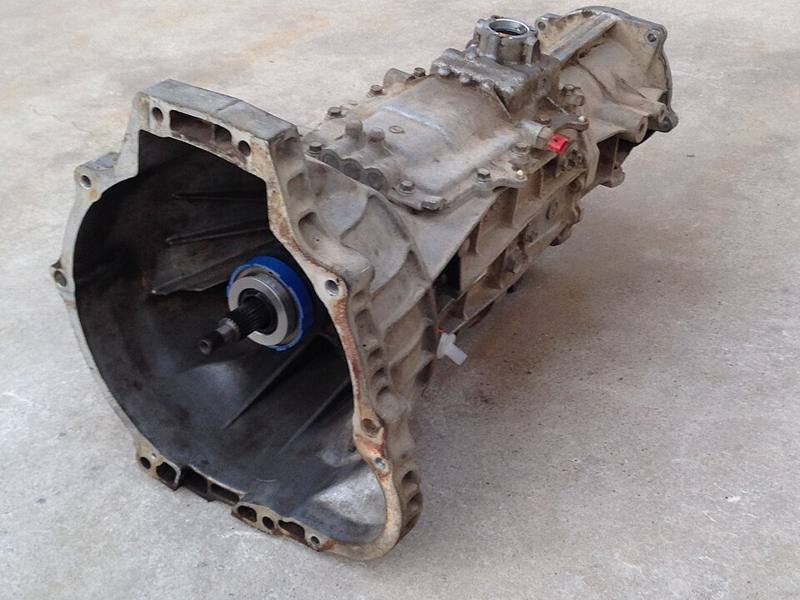
Why so many gears
A heavy truck engine makes its best power in a narrow speed band, roughly 1,100 to 1,800 rpm on many modern diesels. To get 80,000 pounds from a standstill to highway speed without leaving that band, the truck needs many closely spaced gears. A car with six gears jumps a long way between ratios; a truck with 10, 13 or 18 gears takes small steps.
How a manual truck gearbox works
Most heavy manual truck transmissions are non-synchronized. In a car, small synchronizer rings match gear speeds for you. In a truck gearbox, the driver matches them with engine speed instead.
Classic techniques:
- Double clutching: press the clutch, shift to neutral, release the clutch, adjust engine rpm to match the next gear, press the clutch again and select the gear. CDL schools teach this method.
- Floating gears: experienced drivers often shift without the clutch once rolling, by matching rpm precisely. Carriers and schools have different views on it; it is not taught for the CDL test.
Range and splitter
A 10-speed has five positions on the shift pattern used twice. A range selector (a lever on the shift knob) switches between low range and high range. An 18-speed adds a splitter button that splits each gear into a direct and an overdrive half step. A 13-speed splits only the high range. These tricks let a compact shift pattern deliver many ratios.
Automated manual transmissions (AMTs)
An AMT is a manual gearbox with computer-controlled shifting. Mechanically it still uses a clutch and gears, but actuators do the clutch work and shifts, so the driver mostly selects Drive. Automated manuals now make up the large majority of new Class 8 tractors sold in North America.
Why fleets switched:
- Fuel economy: software shifts at the most efficient point every time.
- Easier training: new drivers learn faster and focus on traffic instead of gear selection.
- Less wear: fewer abused clutches and driveline parts.
- Driver retention: many drivers prefer them, especially in heavy traffic.
Fully automatic transmissions
A true automatic, with a torque converter and planetary gears, is common in buses, refuse trucks, fire trucks and many medium-duty trucks. They handle constant stop-and-go well. Heavy long-haul tractors mostly use AMTs instead because they are lighter and more efficient at steady highway speeds.
The CDL automatic restriction
If you take your CDL skills test in a truck with an automatic or automated manual transmission, federal rules place an "E" restriction on the license: you may not drive a commercial vehicle with a manual transmission. Testing in a manual removes that restriction. For drivers who want the widest job choice, learning a manual can still be worth it, though more carriers now run fully automated fleets. See CDL classes and endorsements and restrictions.
Comparison table
| Type | Clutch pedal | Shifting | Common uses |
|---|---|---|---|
| Manual (10, 13, 18 speed) | Yes | Driver, often double clutching | Heavy haul, older fleets, some owner-operators |
| Automated manual (AMT) | Usually none or only for starting | Computer | Most new long-haul tractors |
| Torque-converter automatic | No | Computer, hydraulic | Buses, refuse, fire, medium duty |
Shifting tips that apply to all trucks
- Pick your gear before the hill: downshift before a long climb or descent, not halfway through it.
- Go down a grade in a lower gear: on a steep downgrade, use a gear that lets the engine and engine brake hold your speed, so you only need light, steady service braking.
- Watch the tachometer, not your ears: modern engines are quiet; the tach tells you when you are out of the efficient band.
Never shift a manual truck into neutral to coast down a hill. You lose engine braking and may not be able to get back into gear.