Truck & Car Guides / Trucks explained
Truck classes 1 to 8 explained
In the US, trucks are grouped into eight classes by gross vehicle weight rating. Here is what each class means, with examples and a full table.

What the classes measure
US truck classes are based on gross vehicle weight rating (GVWR): the maximum a vehicle is designed to weigh fully loaded, including itself, fuel, passengers and cargo. The manufacturer sets the GVWR and prints it on a label, usually inside the driver's door frame.
GVWR is not the same as what the truck weighs today. An empty pickup might weigh 5,000 pounds with a GVWR of 7,000 pounds. The class tells you the truck's design capacity, which is what regulators and insurers care about.
The eight classes
The Federal Highway Administration uses these weight bands:
| Class | GVWR (pounds) | Duty | Typical examples |
|---|---|---|---|
| 1 | up to 6,000 | Light | Compact pickups, small vans, most SUVs |
| 2 | 6,001 to 10,000 | Light | Full-size pickups, cargo vans (split into 2a and 2b) |
| 3 | 10,001 to 14,000 | Medium | Heavy-duty "one-ton" pickups, larger box vans |
| 4 | 14,001 to 16,000 | Medium | Larger walk-in delivery vans, small box trucks |
| 5 | 16,001 to 19,500 | Medium | Bucket trucks, larger walk-ins |
| 6 | 19,501 to 26,000 | Medium | Single-axle box trucks, school buses, beverage trucks |
| 7 | 26,001 to 33,000 | Heavy | City tractors, garbage trucks, tandem box trucks |
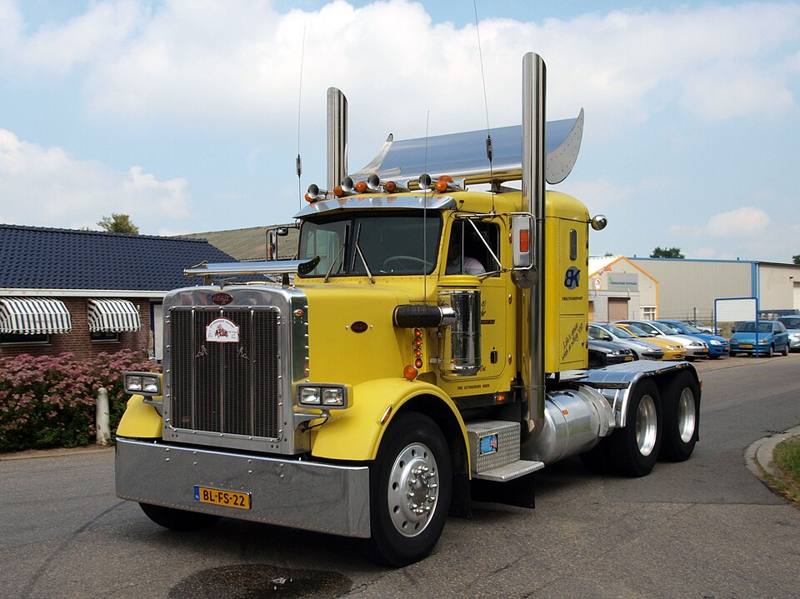
| 8 | over 33,000 | Heavy | Semi tractors, dump trucks, cement mixers |
Class 2 is often split: 2a covers 6,001 to 8,500 pounds and 2b covers 8,501 to 10,000 pounds. That split matters for emissions and fuel-economy rules, because many 2b pickups are treated as work trucks.
Light, medium and heavy duty
- Light duty (Classes 1 and 2): what most people drive every day. No commercial license is needed to drive them for personal use.
- Medium duty (Classes 3 to 6): the delivery and service trucks you see in town. Most can be driven on a regular license if they stay at or below 26,000 pounds and do not carry placarded hazardous materials or many passengers.
- Heavy duty (Classes 7 and 8): above 26,000 pounds. Driving them generally requires a commercial driver's license (CDL).
Why 26,000 and 26,001 matter so much
The jump from Class 6 to Class 7 lines up with the federal CDL threshold. A single vehicle with a GVWR of 26,001 pounds or more generally requires a Class B CDL, and a heavy combination with a trailer over 10,000 pounds generally requires a Class A. That is why rental companies keep their biggest box trucks at 26,000 pounds: anyone with a regular license can drive them. See CDL classes explained.
Class 8 is not one thing
"Class 8" covers everything from a short day-cab tractor to a tri-axle dump truck. A loaded tractor-trailer on a US interstate is generally capped at 80,000 pounds gross without a special permit, but the tractor's own GVWR is far lower because the tractor only carries part of the trailer's weight. How weight is shared across axles is covered in weight limits and the bridge formula.
GVWR, GCWR and payload
- GVWR: the maximum weight of one vehicle, loaded.
- GCWR (gross combination weight rating): the maximum for a truck plus everything it tows.
- Curb weight: the vehicle empty with fluids, no driver or cargo.
- Payload: roughly GVWR minus curb weight: the cargo and people you can add.
- Towing capacity: what the manufacturer says the vehicle can pull, limited by GCWR, the hitch and the brakes.
Never load past the GVWR or axle ratings on the door label. Overloaded vehicles take longer to stop, wear out brakes and tires faster and can be illegal to operate.
Other classification systems
The eight-class GVWR system is not the only one. The EPA groups vehicles differently for emissions rules, and the FHWA uses a separate 13-category scheme based on axle count for traffic counting. States may also use their own weight brackets for registration fees. When someone in the industry says "Class 8", though, they almost always mean the GVWR system above.