Truck & Car Guides / Trailers & loads
Dry vans and reefers
The enclosed box trailers that move most of the goods on store shelves. How they are built, how they are loaded, and what makes refrigerated freight different.
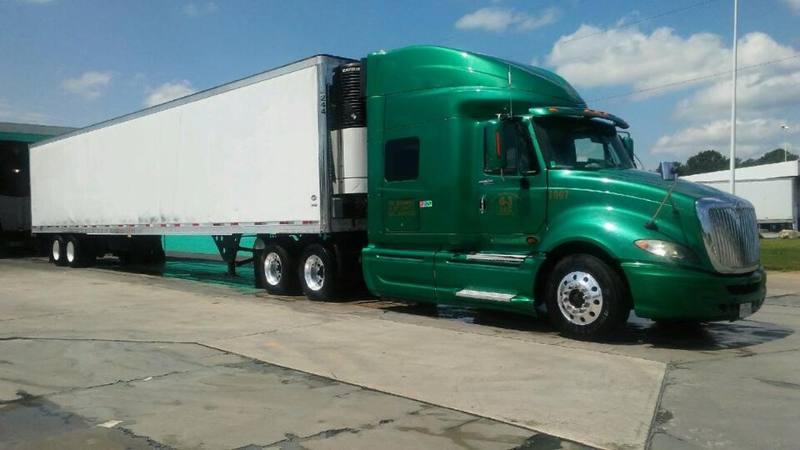
The dry van
A dry van is an enclosed, unrefrigerated box on wheels. It carries anything that needs protection from weather but not temperature control: packaged food, paper products, electronics, furniture, retail goods. It is the single most common trailer on American highways.
Size and capacity
- Length: usually 53 feet, with 48-foot vans still around.
- Width: 102 inches outside, a little less inside.
- Interior height: commonly around 9 feet, depending on the floor and roof design.
- Pallets: a 53-foot van commonly fits 26 standard 48 by 40 inch pallets in a single layer, or more if they are loaded "turned" or stacked.
- Weight: most dry van loads top out somewhere around 42,000 to 45,000 pounds of cargo, because the tractor and trailer themselves take up much of the 80,000-pound gross limit.
Doors and floors
Most vans have swing doors that open fully at the back; some have a roll-up door. Floors are usually hardwood or composite, and walls may have logistics posts or E-track for load bars and straps.
The reefer
A reefer is a refrigerated van. It looks like a dry van with a refrigeration unit on the front wall, powered by its own small diesel engine (or increasingly by batteries or electric standby power). Reefers can cool or heat. Common settings range from deep-frozen cargo well below zero Fahrenheit up to produce kept around the mid-30s to 50s Fahrenheit.
What makes reefer work different
- Temperature logs: shippers and receivers check the set point and the unit's recorded temperatures. Cargo can be rejected if it was out of range.
- Pre-cooling: drivers usually pre-cool the empty trailer before loading.
- Continuous or cycle mode: continuous mode keeps air moving for sensitive loads like produce; cycle-sentry mode saves fuel on frozen loads.
- Airflow: pallets are loaded to let air circulate around them. Blocking the return air at the front can create hot spots.
- Fuel: the reefer unit has its own fuel tank that must be watched.
- Seals and pulp temperatures: some receivers probe the product itself to confirm it stayed in range.
Write down the set point from the bill of lading and double-check it against the unit before you leave the shipper. A wrong set point is one of the most expensive mistakes in reefer freight.
Live load vs drop and hook
- Live load or unload: the driver waits at the dock while the trailer is loaded or unloaded. This can take one hour or many.
- Drop and hook: the driver drops an empty or loaded trailer and hooks a different one that is already ready. Faster and preferred by drivers.
- Detention: pay some carriers and brokers offer when a driver waits beyond a set free time, often two hours.
Securing freight inside a van
Even in a box, freight can shift. Drivers and shippers use load bars, straps on E-track and airbags to stop pallets sliding when the truck brakes or turns. A shifting load can damage freight and make the truck unstable. See cargo securement basics.
Dry van vs reefer
| Dry van | Reefer | |
|---|---|---|
| Temperature control | None | Cooling and heating |
| Typical freight | Packaged, non-perishable | Food, produce, flowers, medicine |
| Extra equipment | None | Refrigeration unit and fuel tank |
| Driver duties | Paperwork, seal checks | Paperwork, temperature monitoring |
| Rates | Baseline | Often higher than dry van |
| Freight seasonality | Steady with retail peaks | Strong produce seasons |
Seals and paperwork
Shippers often place a numbered seal on the doors. The driver records the number on the bill of lading (BOL), and the receiver checks it is intact. A broken or missing seal can lead to a refused load, so drivers do not open sealed doors unless instructed by the shipper, carrier or law enforcement.