Truck & Car Guides / Trailers & loads
Oversize loads and heavy haul
Wind-turbine blades, transformers and giant mining machines need permits, escorts and careful route planning. Here is how oversize and overweight moves work in general.
What makes a load oversize
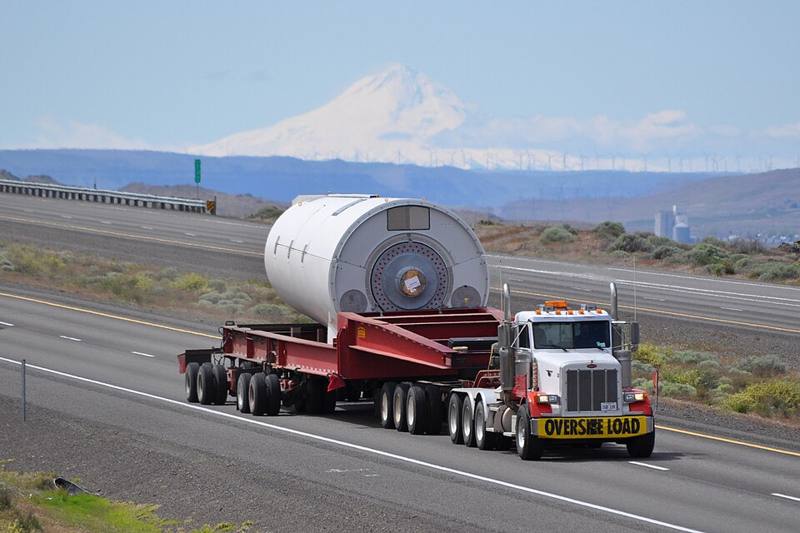
A load becomes oversize when it exceeds the legal dimensions for the road, and overweight when it exceeds legal weights. Typical US triggers:
- Width: more than 8 feet 6 inches (102 inches), the federal standard width.
- Height: more than the state limit, commonly 13 feet 6 inches to 14 feet, depending on the state.
- Length: beyond state limits for the trailer or overall combination.
- Weight: above 80,000 pounds gross or the axle and bridge formula limits.
Oversize and overweight permits are generally only issued for non-divisible loads: things that cannot reasonably be taken apart, such as a single beam, a transformer or a large machine.
Permits
Each state issues its own permits, so a load crossing four states needs four sets of approvals. Permits typically specify:
- The exact route, including which roads and bridges may be used.
- Travel times, often daylight only and often not on weekends or major holidays.
- Required signs, flags and lights.
- Escort or pilot vehicle requirements.
- Maximum speed in some cases.
The largest moves, often called superloads, may need engineering review of bridges, route surveys, temporary removal of signs or traffic signals and police escorts.
Signs, flags and lights
Common requirements include:
- "OVERSIZE LOAD" banners on the front of the truck and the rear of the load.
- Red or orange flags at the corners and extremities of the load.
- Amber warning lights on the truck and escort vehicles in many states.
- Lights at the widest points if moving at night where allowed.
Pilot cars and escorts
Pilot car drivers, sometimes called escort vehicle operators, travel ahead of and behind wide or long loads. Their jobs:
- Warn oncoming and following traffic.
- Check overhead clearance with a height pole that touches wires or structures before the load does.
- Communicate with the truck driver by radio about hazards, tight turns and traffic.
- Help control traffic at intersections when permitted.
Rules on when escorts are needed, and whether they must be certified, vary by state. Very wide loads may need one in front and one behind; the biggest also need police.
Trailers for heavy haul
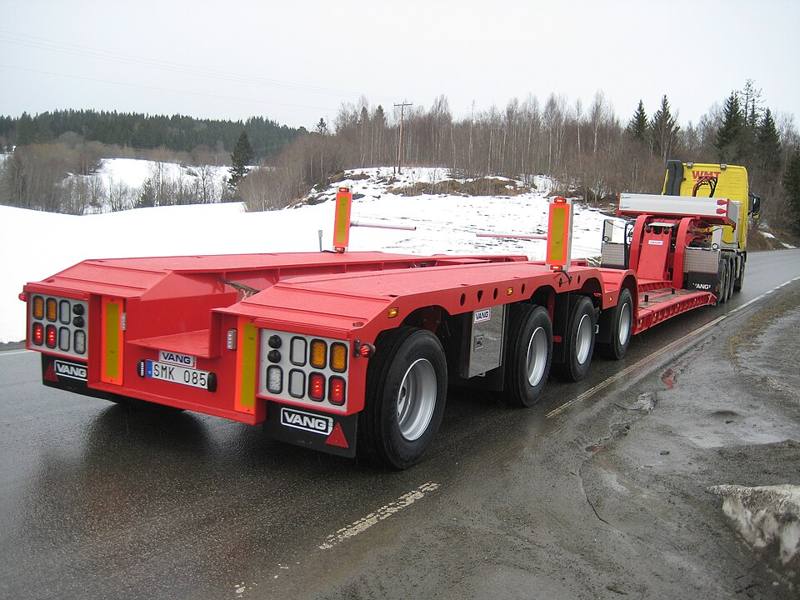
Heavy haul moves use lowboys and RGNs, extendable flatbeds, perimeter and beam trailers, and modular hydraulic trailers with many steering axle lines. Extra axles spread the weight so each axle stays within what the road and bridges can handle under the permit.
Planning a move
- Measure the load precisely, including any parts that stick out.
- Choose a trailer and axle setup that keeps height and axle weights as low as practical.
- Request permits from every state on the route and check for restrictions.
- Survey the route for low bridges, tight turns, construction and weak bridges.
- Book escorts and, if needed, utility crews to lift wires.
- Drive slowly and plan stops where a giant load can safely park overnight.
If you see a pilot car with an "Oversize Load" sign, be ready for a very wide or long vehicle. Slow down, give it room, and never try to squeeze past on a narrow road or bridge. See sharing the road with trucks.
Famous heavy moves
Some of the most impressive road moves involve mining machines, refinery vessels and even spacecraft components. For the giants that move under their own power, see giant machines.